A practical guide to planting olive trees: choosing the site, soil, watering, feeding, pruning and protecting the tree from common diseases, step by step.
Contents
The olive is one of the main cultivated trees of the Mediterranean region. With the right care in its first years, the tree produces for many decades. This guide brings together the key steps, from choosing the right spot to pruning and protecting the tree.
Choose the right spot
Olive trees love the sun. Pick a place that receives at least 6–8 hours of direct sunlight a day and is not shaded by buildings or other trees.
Drainage matters just as much. Olives tolerate poor, stony and chalky soils, but they cannot stand water sitting around their roots. If rainwater lingers on the surface for hours after a storm, plant on higher ground or improve the drainage first.
How to plant a young tree
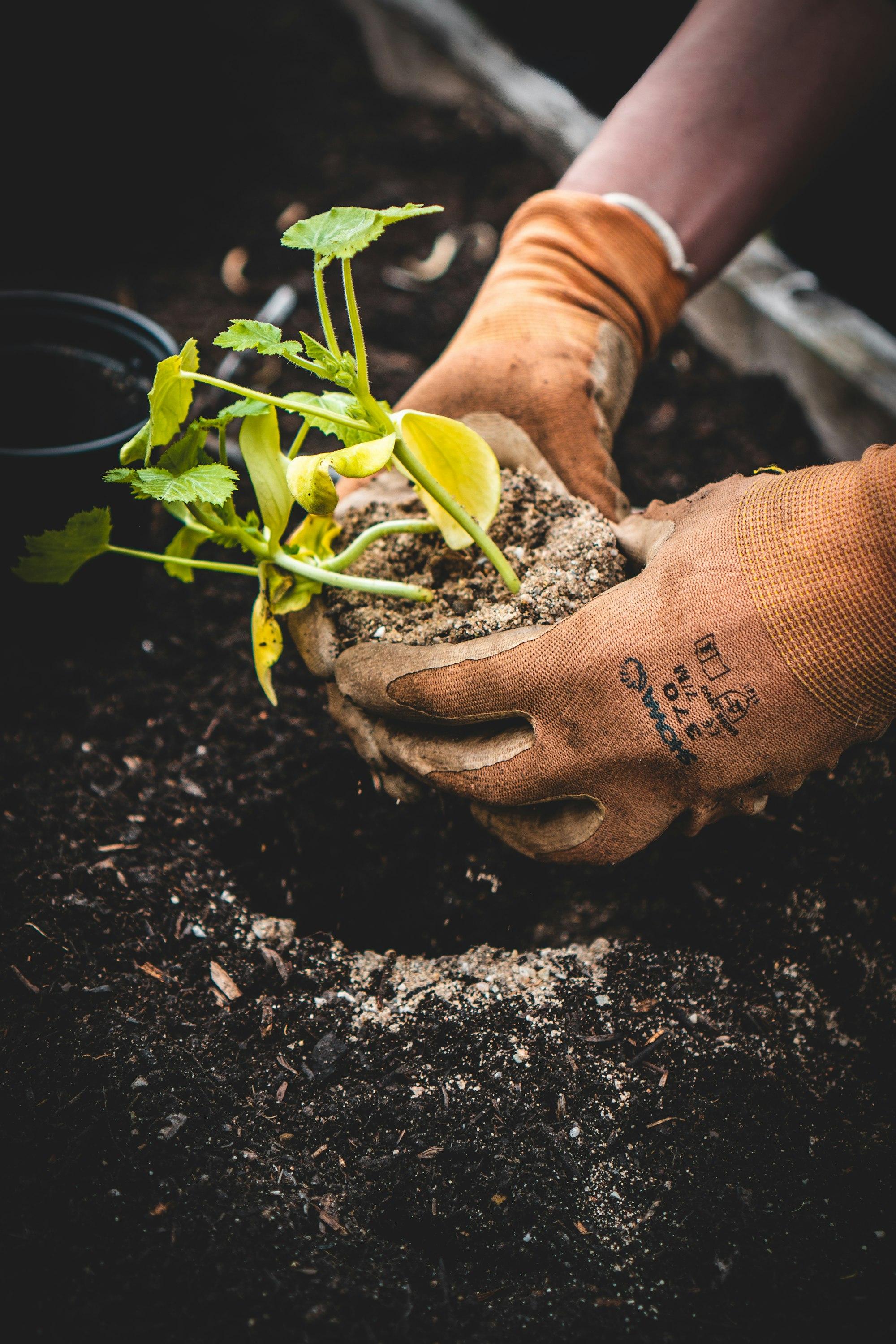
- Dig the hole twice as wide as the root ball and roughly as deep.
- Loosen the roots gently if they have circled the pot.
- Set the tree at the same level it grew in the pot — do not bury the trunk deeper.
- Backfill with the soil you removed, firming it lightly to remove air pockets.
- Add a support stake on the windward side and tie the tree loosely.
- Water thoroughly straight after planting, even if the soil looks moist.
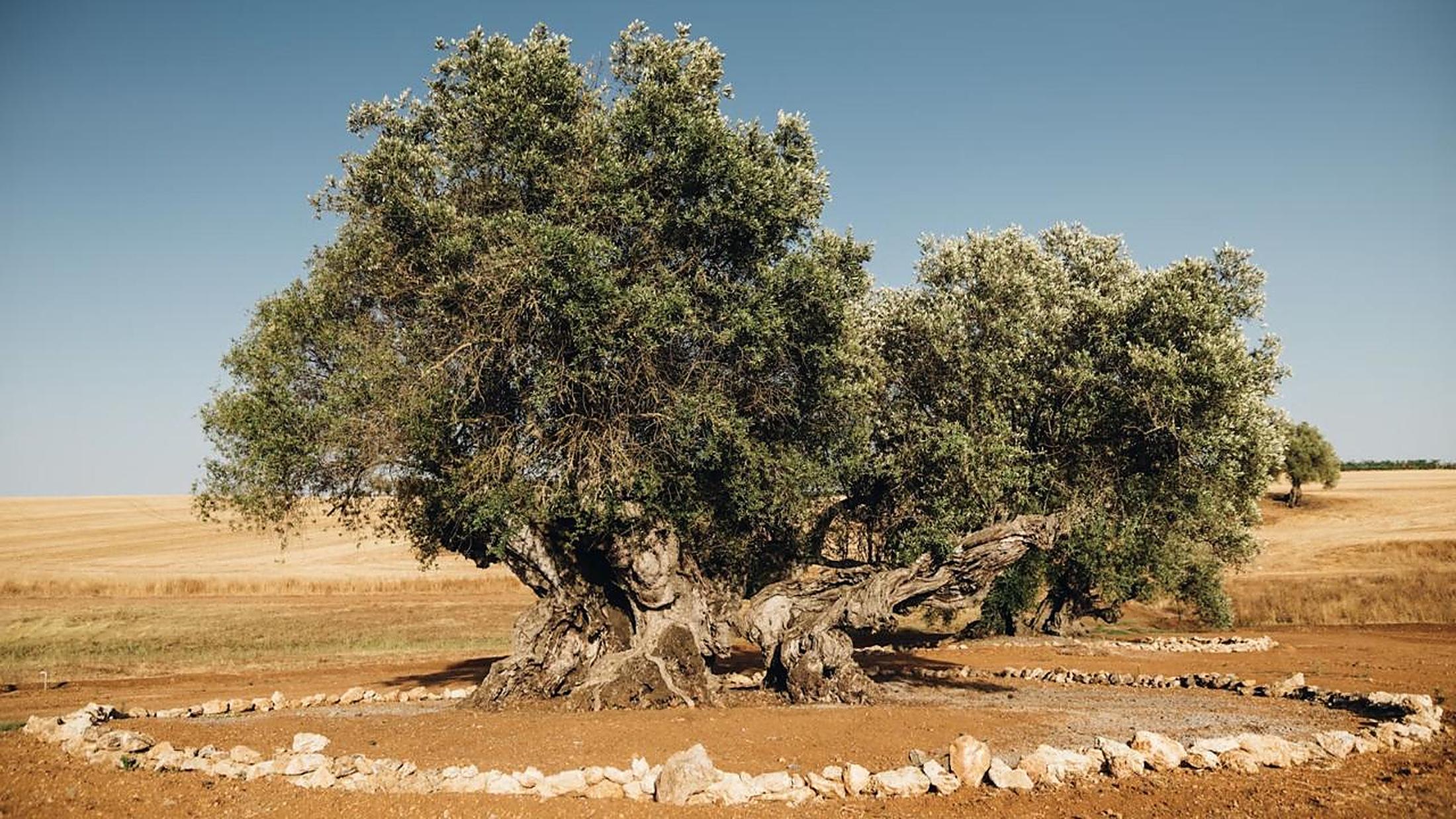
In an orchard, traditional spacing between trees is about 6–8 metres, so that each canopy gets enough light and air. In a small garden, a single olive tree can become the centrepiece of the whole space.
Watering in the first years
A mature olive is remarkably drought-tolerant, but a young tree needs water until its roots have spread.
- For the first two years, water deeply and infrequently — one generous soak a week beats a little water every day.
- During summer heatwaves, check the soil every few days: if it is dry 5 cm below the surface, it is time to water.
- In autumn and winter, rainfall is usually enough.
A layer of mulch (straw, bark or dry leaves) around the base, kept clear of the trunk, holds moisture and suppresses weeds.
Feeding
Olives are not heavy feeders. In late winter or early spring, a layer of well-rotted compost or organic manure around the canopy is usually enough for young trees. For productive orchards, the right feeding plan is best decided after a soil analysis.
Avoid heavy nitrogen in late summer: it encourages soft growth that is easily damaged by cold.
Pruning
Pruning gives an olive tree its shape, light and air. The best time is late winter or early spring, once the risk of hard frost has passed.
Young trees
In the first years the goal is a strong framework. Many growers prefer the open “vase” shape: three or four main branches spreading from the trunk, leaving the centre open to the light.
Productive trees
- Remove dead, damaged or crossing branches.
- Thin the centre of the canopy so light reaches everywhere.
- Remove suckers growing from the base of the trunk.
- Do not over-prune in a single year — olives fruit on the previous year’s wood.
Common pests and diseases
A few problems frequently seen in Mediterranean olive groves:
- Olive fruit fly (Bactrocera oleae) — damages the fruit through summer and autumn.
- Olive peacock spot (Spilocaea oleagina) — round spots on the leaves, especially in wet weather.
- Olive knot (Pseudomonas savastanoi) — galls on branches, often spread through pruning wounds.
A well-ventilated canopy and clean pruning tools go a long way towards prevention. For specific treatments, consult a licensed agronomist.
In summary
Sun, free-draining soil, generous water in the early years and measured pruning — these are the foundations of a healthy olive tree. If you are planning to plant, read when is the best time to plant olive trees, or get in touch for advice on your space.