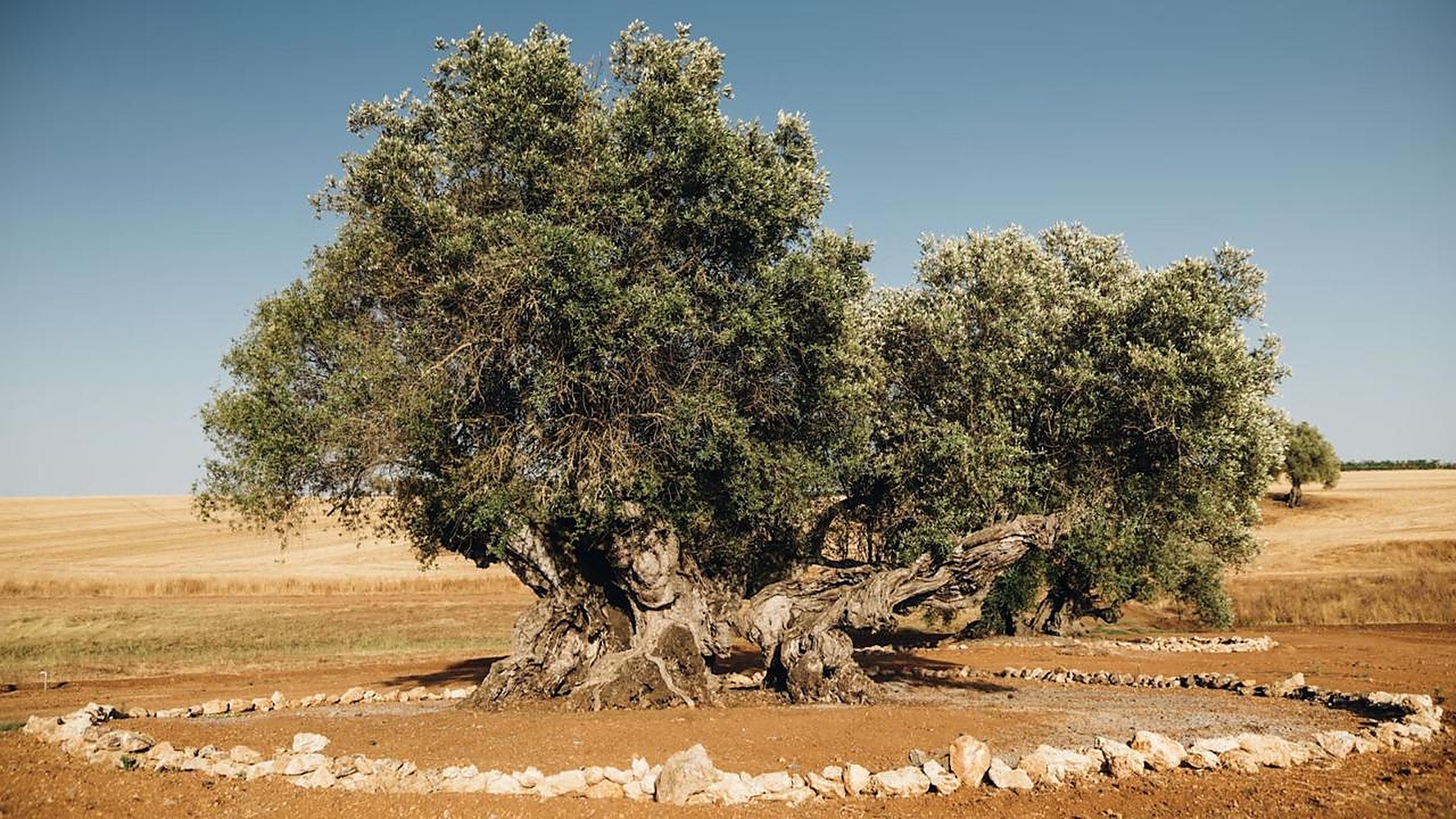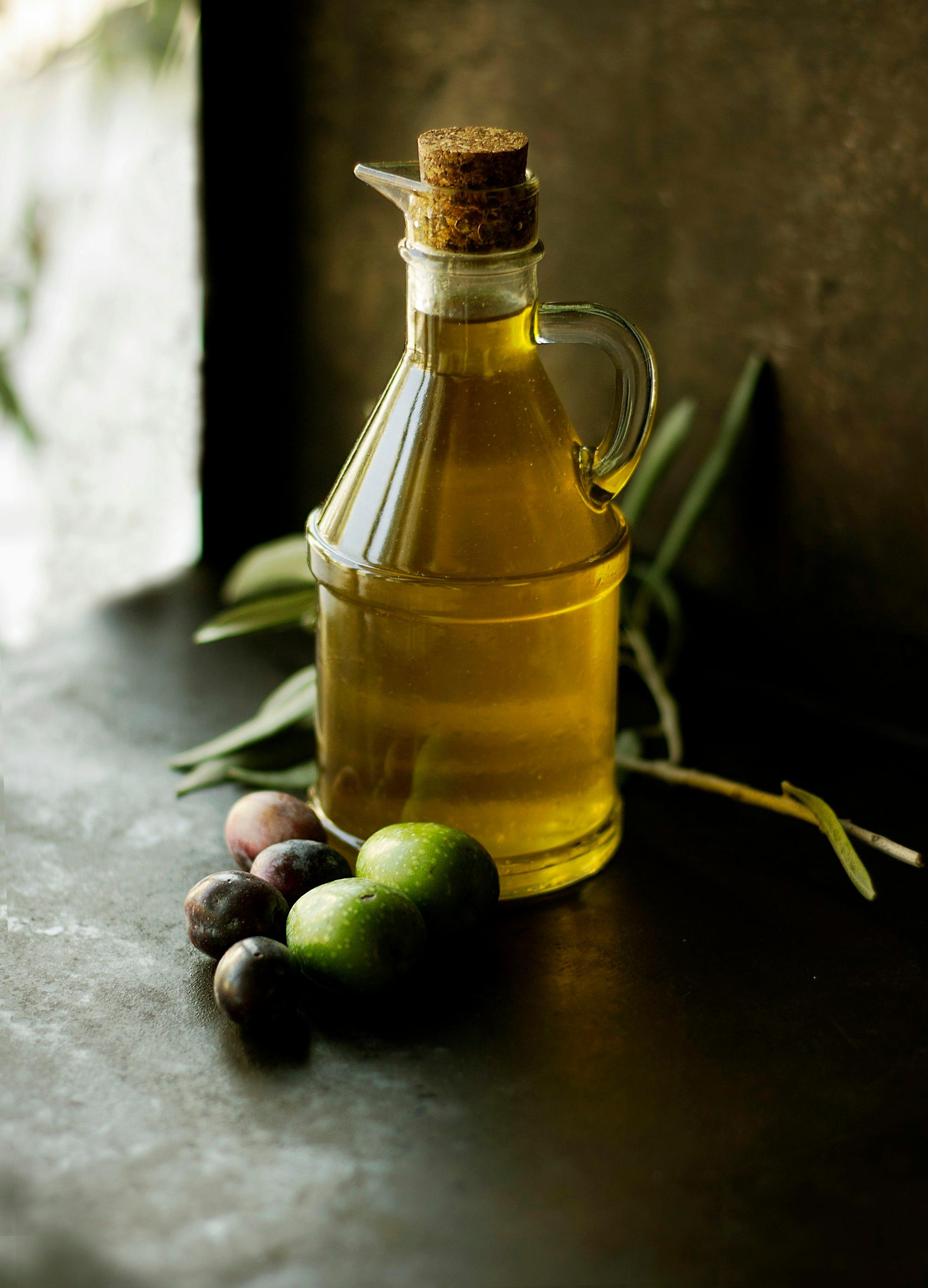
The olive’s journey from branch to bottle: when olives are picked, why speed matters, how the oil is extracted and what makes an olive oil “extra virgin”.
Contents
Producing extra virgin olive oil involves several stages. Each stage, from harvest to storage, affects the oil’s aroma, flavour and quality. The process is described below.
1. Harvest: choosing the moment
In Albania, the olive harvest usually runs from October to December, depending on the variety, the area and the purpose.
- Olives picked early, as they turn from green to purple, usually yield less oil, but an oil that is more aromatic, fruity and peppery.
- Fully ripe olives give more oil with a milder flavour.
The fruit must be handled gently: crushed or damaged olives start to ferment and lower the quality of the oil.
2. From grove to mill — as quickly as possible
Once the olives are picked, the clock is ticking. The longer they sit in a pile, the more acidity rises and flavour defects appear. Good practice is to process olives within 24 hours, transported in ventilated crates rather than sacks.
3. Cleaning and washing
At the mill, leaves and twigs are removed first, and the olives are then washed to clear away dust and impurities.
4. Milling
The olives are crushed, stones and all, into an even paste. Milling breaks open the fruit’s cells and releases the droplets of oil.
5. Malaxation
The paste is mixed slowly for a set time. During this step, tiny droplets of oil merge into larger ones that are easier to separate.
Temperature matters here. Under EU rules, the term “cold extracted” may be used when the oil is obtained at no more than 27 °C — which helps preserve its aromas.
6. Separating the oil
The oil is separated from the water and fruit solids by mechanical means only — usually with a centrifuge (decanter), or with presses in the traditional method. No solvents or chemicals are used.
7. Storage
The freshly made oil is left to settle or is filtered, then stored in stainless steel tanks or dark bottles. Olive oil has three enemies:
- light,
- heat,
- air.
What does “extra virgin” mean?
Extra virgin olive oil is the highest grade. Under international standards it:
- is obtained by mechanical means only, with no chemical treatment;
- has a free acidity of no more than 0.8%;
- has no defects in taste or aroma, as assessed by professional tasting panels.
A good extra virgin oil often has notes of fresh fruit, a gentle bitterness and a peppery feeling at the back of the throat — signs of polyphenols.
In summary
Harvesting at the right time, fast transport, mechanical extraction at a controlled temperature and storage away from light and heat — that is how an extra virgin olive oil is born. Learn more about the Vishkulli Olive Oil Factory or contact us to order.